The assets are always the last thing to arrive.
-
You start with a PDF
The only thing that exists on day one is the drawing. Everything a campaign is actually made of has to be commissioned from it, by someone else, later.
-
Every change is a re-brief
A moved partition, a renamed suite, a different fit-out story: each one goes back into a queue, and the version on the website drifts away from the version in the building.
-
The portfolio does not match
Different suppliers, different years, different styles. Individually fine; together, a collection rather than a brand.
The plan stops being the brief and becomes the source.
You still make the campaign. The assets stop being something you wait for.
How it goes now
- Write a brief around a drawing you cannot show anyone.
- Wait for the visual supplier’s queue.
- Build the campaign around whatever came back.
- A change means another brief, and another wait.
- Only the flagship spaces are worth doing twice.
How it goes with StudiO
- Upload the drawing you already have.
- Review the extracted model once, in about an hour.
- Publish a hosted site for the space, inside a day.
- A change is made to the model, not re-commissioned.
- Every space gets the same treatment, because it costs the same plan.
One model. The campaign comes off it.
Because everything is generated from the same extracted geometry, the interactive view, the imagery and the fitted plan are all describing one space. There is no reconciling a render against a plan against a schedule, because none of them were drawn separately.
- A model to look through. The interactive 3D view a prospect can move around in, embedded in the space’s own page.
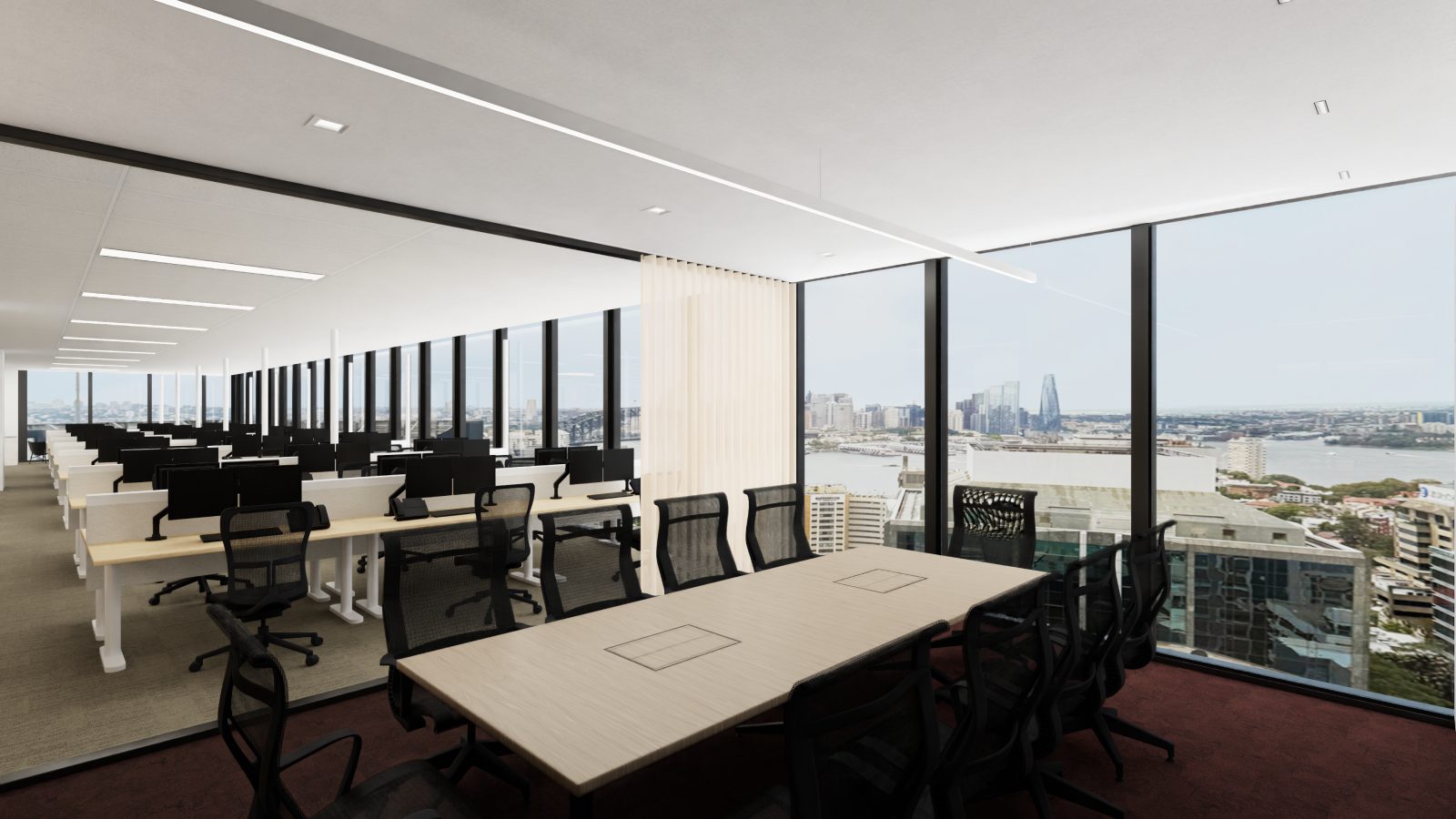
- Imagery from the same geometry. Stills of the space as modelled, rather than of a space that resembles it.
- The plan, fitted. The vector plan aligned to the model, at the scale the drawing stated.
- A page per space. Hosted, sendable, and consistent across everything you are marketing.